UX Design for Rural India
Reshaping Waste Workers
Livelihoods in Seemapuri
Project Overview
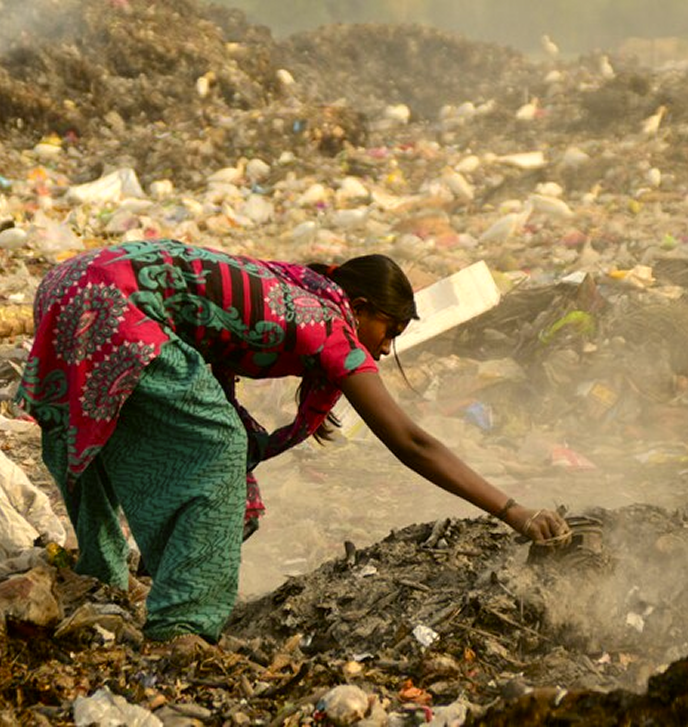
Seemapuri, a massive hub for informal waste collection in Delhi, is home to thousands of ragpickers working in harsh, life-threatening conditions.
These workers act as the backbone of urban waste management, yet they suffer from a blatant lack of recognition, safety protocols, and fair compensation.
The Goal
To research and conceptualize systemic and design interventions aimed at improving their daily efficiency, working conditions, and broader livelihood opportunities.
Project Goals
Understand Realities
Dive deep into the social, environmental, and occupational realities of the ragpicking community.
Analyze Gaps
Identify systemic failures, economic exploitation, and structural gaps in their daily workflow.
Design Solutions
Propose actionable frameworks and safety interventions for long-term improvement and dignity.
Design Process
Following the Double Diamond methodology.
Discover
ResearchDefine
SynthesisDevelop
IdeationDeliver
SolutionsDiscover Phase
📍 Seemapuri Context
Located in Northeast Delhi, Seemapuri began as a refugee settlement in the 1970s. Today, it has evolved into a massive, highly informal waste economy where thousands sustain themselves by sorting through toxic city runoff.
⚠️ Living & Working Conditions
Hazardous Exposure
Workers routinely encounter medical waste, toxic chemicals, and sharp objects without basic protective gear.
No Basic Facilities
Living quarters lack proper sanitation, clean drinking water, and structural safety.
Family Involvement
Generational trap: children often join the collection process instead of attending school.
Lack of Support
Operating entirely outside formal safety nets, with no government health or financial support.
💰 Economic Struggles
- Meager Income: Earnings fluctuate heavily, typically between ₹100–300 daily.
- Exploitation: Constantly threatened by middlemen bribes and unfair weighing practices.
- Displacement: Direct competition with private Municipal Corporation (MCD) waste contracts pushing them out.
- Stigma: Intense social stigma limits any mobility out of the sector.
Primary Research
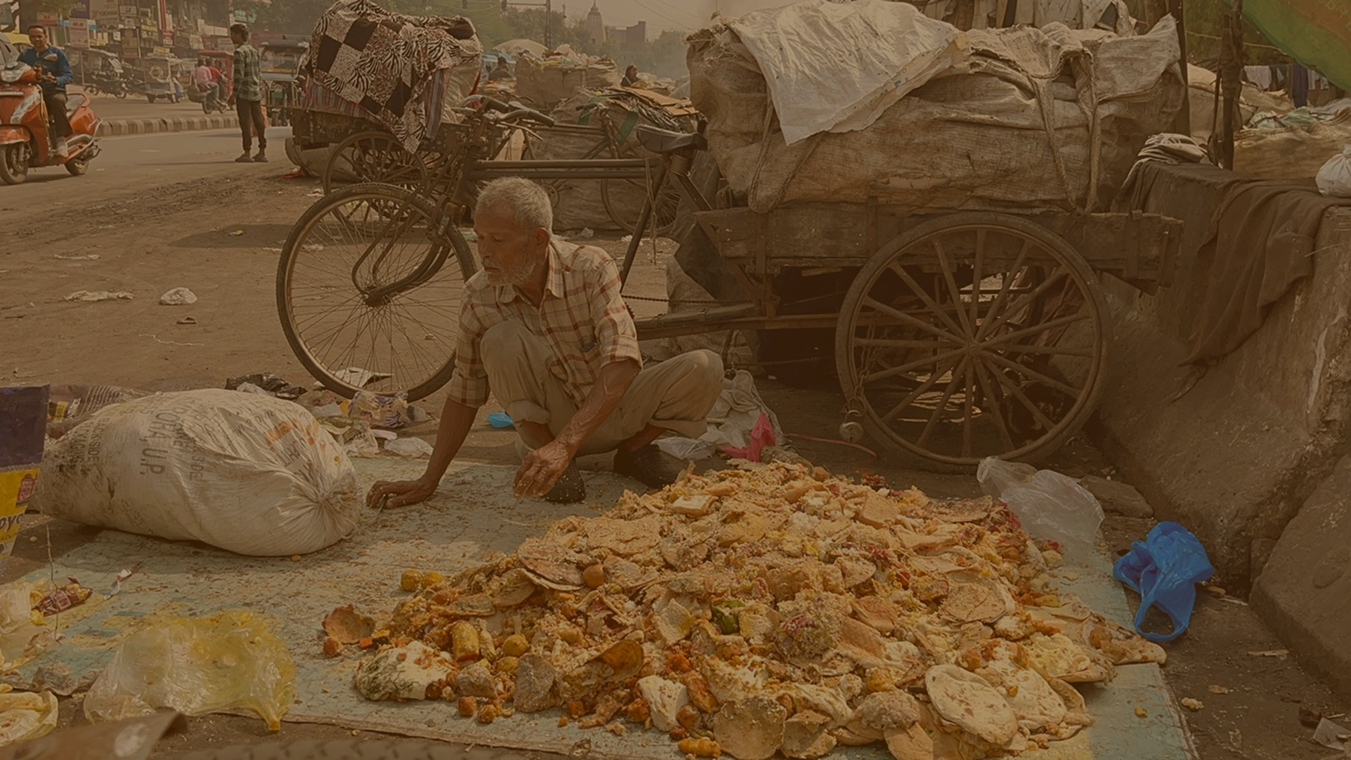
We conducted immersive field visits to Seemapuri, engaging directly with the community. Through semi-structured interviews and observational mapping, we documented their unvarnished reality.
These raw conversations allowed us to move past statistics and understand the psychological and physical toll of their daily grind.
Key Insights
🤝 Social
Deep-rooted caste stigma and community isolation. Lack of a unified voice.
💸 Economic
Unpredictable cash flows. Dependent on exploitative scrap dealers.
🏥 Health & Safety
High prevalence of respiratory diseases, infections, and physical injuries.
🌍 Environmental
Polluted living spaces wrapped in toxic fumes and contaminated water.
📚 Education
High dropout rates; children lack access to continuous skill-building gaps.
The Core Problem
An unstructured and profoundly unsafe waste management system drives the Seemapuri community into chronic health risks, severe financial instability, and an intergenerational lack of awareness & education.
Target Audience
User Personas
Abdul Sheikh
Ragpicker / Community MemberGoals
To earn a steady, predictable income and send his children to a safe school.
Pain Points
Daily injuries, harassment by authorities, entirely dependent on scrap market fluctuations.
Sunita
NGO Field WorkerGoals
To successfully integrate health camps and mobilize the community for formalized rights.
Pain Points
Lack of systematic data, widespread community distrust, and language/cultural barriers.
Key Problem Areas
1. Community Disorganization
No collective bargaining power. Workers operate strictly individually, leaving them highly vulnerable.
2. Poor Livelihood
Income below the poverty line with extreme daily volatility and zero financial safety nets.
3. Lack of Awareness
Ignorance regarding fundamental human rights, fair wages, and governmental schemes.
4. Education Gaps
Children are pulled into the workforce early. No pathway for skill transition.
Proposed Solutions
A structural shift moving from vulnerable individuals to empowered collectives.
Community Welfare Groups
Establishing localized unions led by community heads to centralize negotiation, ensuring fair prices from aggregators and unified protection against harassment.
Workshops & Training
Categorized capability building for men, women, and children. Transitioning from informal scavenging to safe, mechanized sorting and upcycling skills.
Inaam Card System
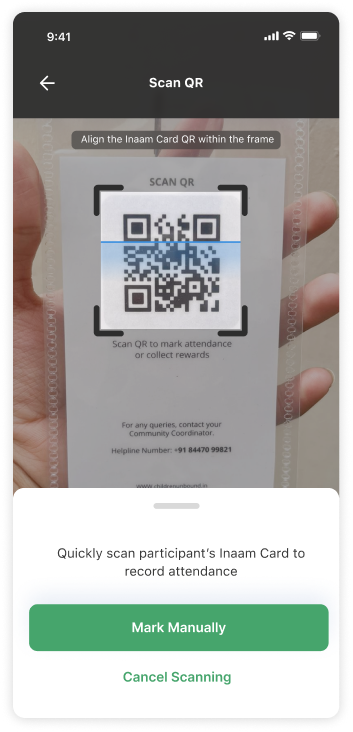
A digitized, QR-based incentivization framework. Workers earn loyalty points for safe practices and consistent supplies, redeemable for rations or healthcare.
System Flow
(Appointed from within)
Workshops & Training
👨 Men
- Mechanized sorting techniques
- Safety & hygiene protocols
- Financial literacy basics
👩 Women
- Upcycling & craft making
- Women's health & sanitation
- Micro-entrepreneurship
👧 Children
- Foundational education integration
- Safe play zones & activities
- Awareness against child labor
The Inaam Card
Incentivizing Formalization
The Inaam card acts as a digital identity and reward mechanism. By tracking daily waste deposits via a simple QR system handled by coordinators, workers accumulate points.
- QR-Based Tracking: Seamless logging of effort without needing smartphones.
- Reward Points: Earn points for utilizing safety gear and consistent deliveries.
- Incentives: Points redeemable at affiliated local ration shops or health clinics.
Final Impact
Transforming a vulnerable workforce into an organized micro-economy.
Improvement in formalized daily livelihood negotiations.
Stronger community engagement and collective bargaining.
Decreased workplace hazards through systematic training.